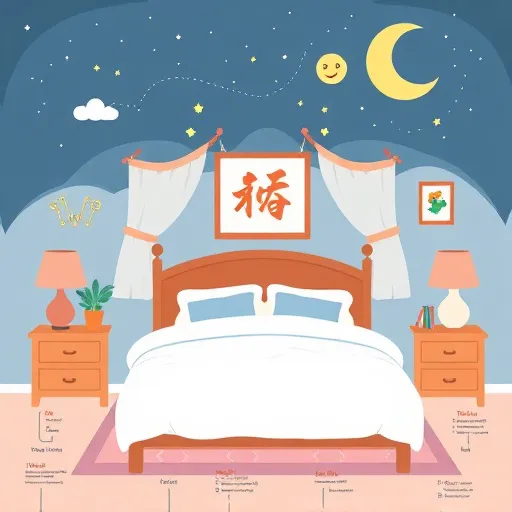
Feng shui meets mode
Why Feng Shui Still Matters for Sleep in 2026
Feng shui isn't some mystical relic — it's basically an early system of environmental design, a way of arranging your space so it supports calm, balance, and healthy energy flow. And here's the cool part: modern sleep science has totally caught up. Researchers now throw around terms like restorative environments, circadian-friendly lighting, and decluttered spaces that reduce anxiety — and those concepts map almost one-to-one onto traditional feng shui principles. That's exactly why feng shui bedroom rules for better sleep are having a serious moment right now.
What makes feng shui bedroom rules for better sleep especially relevant in 2026 is that our bedrooms have quietly turned into multi-purpose rooms. A home office desk here, a streaming setup there, a stack of parcels in the corner. According to industry professionals working in sleep and wellness design, the single biggest bedroom mistake in recent years has been function creep — letting work, entertainment, and storage invade the sleep zone. Feng shui has been warning about this for centuries under a different vocabulary, and the feng shui bedroom rules for better sleep crowd has never been louder about it.
The Commanding Position and Bed Placement Rules for Restful Sleep
If you only apply one of the feng shui bedroom rules for better sleep, make it this one. In feng shui, the bed should sit in the commanding position — meaning you have a clear view of the door from the bed, but you're not directly in line with it. This single bed placement tweak is the cornerstone of all feng shui bedroom rules for better sleep.
So what does the commanding position actually mean in practice?
- You can see the bedroom door from where you lie down, without craning your neck.
- Your feet aren't pointing directly at the door — traditionally called the "coffin position," grim name, practical concern.
- The bed sits against a solid wall, giving you a sense of support and security.
- Ideally, the bed lands diagonally opposite the door.
The psychological logic here is rock solid. Humans are wired to monitor entrances — it's a survival instinct. When you can't see the door, part of your brain stays slightly on alert, which fragments deep sleep. Placing the bed in the commanding position lets your nervous system stand down. This is why feng shui bedroom rules for better sleep keep coming back to bed placement before anything else.
Small room? Awkward door placement? You're not alone — plenty of contemporary apartments aren't exactly feng shui-friendly. Practical workarounds for these feng shui bedroom rules for better sleep include using a small mirror or reflective surface to create a visual line of sight to the door (just don't face it at the bed — more below), placing a solid headboard against a wall for grounding, or hanging a curtain or room divider to soften direct door-to-bed alignment.
Mirror Placement, Reflective Surfaces, and Sleep Disruption
Traditional feng shui advises against mirrors facing the bed, and this is one of those feng shui bedroom rules for better sleep where tradition and modern comfort genuinely align. A mirror directly opposite your bed can reflect light — including early morning glare and passing headlights — right onto your sleeping face. It creates visual movement in your peripheral vision, which can trigger micro-awakenings, and it feels startling if you wake in the night and catch a reflection. Honestly, this might be the easiest of all feng shui bedroom rules for better sleep to fix.
If a mirror is unavoidable in your layout, cover it at night with a fabric drape or use a folding screen. Many sleep-focused interior designers recommend mirrored closet doors be fitted with soft-close panels or simply kept closed. Small change, surprisingly noticeable difference — and a perfect example of feng shui bedroom rules for better sleep doing double duty.
Layered Lighting, Warm Color Temperatures, and Circadian Rhythm Support
Here's where feng shui and modern sleep research really shake hands. Traditional practice emphasizes soft, layered lighting in the bedroom and avoiding harsh, direct light — especially overhead fixtures. Contemporary sleep science says the same thing for different reasons: bright overhead light suppresses melatonin and confuses your circadian rhythm. That overlap is a big reason feng shui bedroom rules for better sleep keep winning converts.
Practical lighting rules straight from the feng shui bedroom rules for better sleep playbook:
- Ditch the single bright ceiling light as your evening default — use warm-toned lamps at low levels instead.
- Choose warm color temperatures — think 2700K or lower — for bedside lighting.
- Use blackout curtains to block external light. In feng shui terms, this keeps disruptive energy out; in sleep terms, it protects melatonin production.
- Consider smart bulbs with evening schedules that automatically dim and warm as the night progresses — a modern twist on an old principle within feng shui bedroom rules for better sleep.
One emerging trend worth noting: sleep-focused wellness platforms and device makers have increasingly built "sunset mode" lighting routines into their ecosystems. The idea is to simulate a gradual dusk indoors, which mirrors what feng shui bedroom rules for better sleep have always recommended — a gentle transition into rest rather than an abrupt lights-out.
Decluttering, Under-Bed Storage, and Anxiety Reduction
Clutter is the enemy of rest in virtually every tradition, and feng shui treats it as stagnant energy. Modern psychology frames it as visual noise that keeps the brain mildly activated. Either way, the prescription inside feng shui bedroom rules for better sleep is the same: clear surfaces, clear mind.
A simple decluttering protocol pulled from the best feng shui bedroom rules for better sleep:
- Keep the space under the bed clear — or use only soft storage like bedding. Traditional feng shui associates under-bed clutter with restless energy; practical logic says dust and visual mess don't help either.
- Remove work items from the bedroom where possible. Laptops, paperwork, and charging cables send a "still on duty" signal to your brain.
- Limit exercise equipment in the sleep space — it adds visual bulk and associations with activity rather than rest.
- Edit decor down to a few meaningful items — a couple of personal, calming objects beat a crowded shelf every time.
If you're short on storage, a well-designed storage bed can be a reasonable compromise — just prioritize organization over accumulation. Feng shui bedroom rules for better sleep aren't anti-storage; they're pro-intention.
Calming Color Palette, Earth Tones, and Yin Energy in the Bedroom
Feng shui assigns elemental qualities to colors, and the bedroom is generally considered a place for yin energy — soft, quiet, receptive. That translates into a palette of muted neutrals, gentle earth tones, soft blues, warm grays, and creamy whites. Think of it as the visual layer of feng shui bedroom rules for better sleep.
Colors that support rest and relaxation:
- Earthy neutrals — beige, taupe, warm sand.
- Soft blues and grays — associated with calm and water energy.
- Muted greens — linked to growth and balance, in gentle, desaturated tones.
Colors to use sparingly, per most feng shui bedroom rules for better sleep guides: bright reds and oranges (stimulating, traditionally too active for a sleep space), neon or high-contrast accents (visually loud, even when small), and all-black or heavily dark palettes (can feel heavy — if you love dark tones, balance them with lighter textures). That said, don't treat color rules as absolute. The best bedroom palette is one that feels restful to you. Personal resonance beats rigid theory every time — even the strictest feng shui bedroom rules for better sleep leave room for that.
Window Placement, Overhead Beams, and Headboard Stability Details
Beyond the commanding position, several smaller bed placement details carry real weight in any list of feng shui bedroom rules for better sleep. First, avoid placing the bed under a window — windows are drafty, bright, and acoustically exposed. Feng shui views them as less stable grounding; sleep science points to light and temperature disruption. If you have no choice, use heavy curtains and a solid headboard.
Second, keep both sides of the bed accessible. Traditionally, equal space on both sides symbolizes balance and partnership. Practically, it keeps the bed easy to make, ventilated, and visually anchored — a two-for-one win among feng shui bedroom rules for better sleep.
Third, don't put the bed directly under a heavy shelf or ceiling beam. This is a classic feng shui caution — heavy overhead structures create subconscious pressure. Modern designers agree that looming elements above the bed feel oppressive. Fourth, avoid a desk directly facing the bed; if you must work in the bedroom, screen it off with a divider or curtain to create a psychological sleep zone even in a studio apartment. And fifth, keep the headboard solid — an upholstered or wooden headboard provides a sense of backing and stability, a core principle running through all feng shui bedroom rules for better sleep.
Air Quality, Ventilation, and Energy Flow for Deeper Sleep
Feng shui's concept of qi flow maps neatly onto ventilation, air quality, and temperature regulation. A bedroom that feels stuffy is, in feng shui terms, stagnant — and that's why airflow sits high on the list of feng shui bedroom rules for better sleep. Ventilate daily, even just a few minutes of fresh air exchange. Keep the room cool — most sleep experts point to a slightly cool room temperature as optimal for deep sleep. Use an air purifier if you live in a city or have allergies, since cleaner air means fewer nighttime awakenings. And don't block vents or radiators with furniture — a small layout detail with real comfort consequences.
An industry professional once framed it perfectly: "You can't sleep well in a room that can't breathe." That's feng shui bedroom rules for better sleep in a single sentence, really.
Technology Boundaries, Blue Light, and Screen-Free Wind-Down Routines
No feng shui manual from centuries ago could have anticipated the smartphone on the nightstand — but the principles apply beautifully. Screens are stimulating (yang energy at its most intense), and their light and notifications fragment rest. Modern feng shui bedroom rules for better sleep absolutely have something to say about tech.
2026-friendly tech guidelines within feng shui bedroom rules for better sleep:
- Keep devices out of arm's reach overnight, or better, out of the room entirely.
- Disable notifications after a set hour — many leading platforms now offer built-in focus and sleep scheduling modes.
- Use a traditional alarm clock so your phone isn't your first and last interaction of the day.
- Consider a smart sleep tracker that monitors without a screen — silent data collection rather than glowing notifications.
If you use a smart speaker or sleep-aid device, that's fine — just keep it on a shelf away from the bed and switch off any indicator lights. In feng shui speak, you're keeping active energy out of the rest zone. In plain English, you're removing glowing distractions. Same result, and one of the most practical feng shui bedroom rules for better sleep you can apply tonight.
Plants, Wall Art, and Symbolic Objects That Support Relaxation
Plants are generally welcome in feng shui bedrooms, but there's nuance. A few small, soft-leaved plants can add life and freshness. However, a jungle of large plants in a small bedroom can feel overwhelming and raise humidity — so keep it modest, as with all feng shui bedroom rules for better sleep. Wall art deserves a mention too: avoid images of violent or turbulent scenes, lonely figures or isolation themes, and large-scale water imagery (traditionally associated with emotional overwhelm in a sleep space). Instead, lean toward soft landscapes, abstract calm forms, botanical prints, or personal photos of happy moments. Art sets an emotional tone — pick art that makes you exhale.
Feng shui also includes a rich symbolic layer — pairs of nightstands and lamps for balance and partnership, rounded furniture edges that feel softer and calmer than sharp angles, natural materials like wood, cotton, linen, and wool for that grounded feel, and a small bowl or tray as a landing spot that keeps surfaces clear. None of these are expensive upgrades. Most are simply thoughtful ones — and they're the delightful, easy-to-love side of feng shui bedroom rules for better sleep.
Common Feng Shui Bedroom Mistakes to Fix This Week
If you want a fast action list, here's your checklist drawn from the most important feng shui bedroom rules for better sleep:
- ✗ Bed facing the door directly, or with feet pointing at it → reposition or screen it.
- ✗ Large mirror facing the bed → move it or cover it at night.
- ✗ Bright overhead light as the evening default → switch to warm lamps.
- ✗ Clutter under and around the bed → clear it.
- ✗ Work desk dominating the sleep zone → screen it or relocate it.
- ✗ Phone charging on the nightstand → move it across the room.
- ✗ Heavy shelf or beam over the bed → rearrange.
- ✗ Stuffy, unventilated room → add daily airing.
Pick three, fix them this weekend, and notice the difference over a week. Sleep improvements are cumulative — and so are the benefits of sticking with feng shui bedroom rules for better sleep.
As we move deeper into 2026, more people are treating sleep as a non-negotiable wellness pillar rather than a leftover slice of the day. That shift is exactly why feng shui bedroom rules for better sleep are seeing a resurgence — and why leading wellness platforms and design-forward brands are increasingly building rest-friendly features into their products. The tools are modern; the wisdom is old; the goal is simple. Better sleep. So start small. Move the bed if you can. Cover the mirror. Dim the lights. Clear the clutter. Your bedroom is the one room you spend a third of your life in — it deserves a little more thought than it usually gets, and feng shui bedroom rules for better sleep are the easiest place to start.